


Trip price of €2,500 is per person, based on a bed in a double room when accommodation is in a hotel, or a bed in a dormitory when accommodation is in a refuge/hostel.
ITAGP1027
The highlights of this journey
Grand Angle
- Comfortable mountain accommodations
- Crossing the Dolomites from north to south along the classic Alta Via 1 route
- Discovering Mount Pelmo and the Civetta massif
Yours
experts
Useful
information
- Length
-
7 days
- From
-
2 120,00 €
The Alta Via 1 (AV1) is the historic backbone of the Italian Alps, stretching 150km from the turquoise Lago di Braies to the Belluno Valley. As a specialist in Dolomites hiking tours since 1983, Grand Angle has curated this 7-day itinerary to focus on the most spectacular mineral landscapes of the central range. These Dolomites guided hikes lead you from the sophisticated surroundings of Cortina d'Ampezzo into the heart of a UNESCO World Heritage site, where vertical limestone walls meet high-altitude pastures.
The route offers a technical and aesthetic immersion into the must-see sites of the Dolomites. You will trek beneath the soaring peaks of the Tofane massif, navigate the labyrinthine rock formations of the Cinque Torri, and reach the shores of Lake Federa, framed by the Croda da Lago. The journey continues along the base of Mount Pelmo’s immense cliffs before circling the formidable Civetta massif. This crossing is a quintessential experience for those seeking high-quality Europe hiking tours, combining the expertise of our mountain guides with the authentic atmosphere of traditional alpine refuges.
From the wild crossing under the Nuvolau to the balcony paths overlooking Lake Alleghe, this section of the AV1 represents some of the best hikes near Cortina d'Ampezzo. At Grand Angle, we leverage our long-standing field experience to ensure a logistical flow that allows you to focus entirely on the terrain and the remarkable geology of the "Pale Mountains."
Prefer to walk at your own pace? This itinerary is also available as an Alta Via 1 self-guided hiking trip.
Dates, prices, and booking
| From / To | Price | Status | Registration |
|---|---|---|---|
| 13/06/2027 - 19/06/2027 | 2 500,00 € | Guaranteed from 4 |
Book or place an option |
| 27/06/2027 - 03/07/2027 | 2 500,00 € | Guaranteed from 4 |
Book or place an option |
| 04/07/2027 - 10/07/2027 | 2 500,00 € | Guaranteed |
Book or place an option |
| 25/07/2027 - 31/07/2027 | 2 500,00 € | Guaranteed from 4 |
Book or place an option |
| 15/08/2027 - 21/08/2027 | 2 500,00 € | Guaranteed from 4 |
Book or place an option |
| 27/08/2027 - 02/09/2027 | 2 500,00 € | Guaranteed from 4 |
Book or place an option |
| 29/08/2027 - 04/09/2027 | 2 500,00 € | Fully booked |
|
| 05/09/2027 - 11/09/2027 | 2 500,00 € | Fully booked |
|
| 10/09/2027 - 16/09/2027 | 2 500,00 € | Guaranteed from 4 |
Book or place an option |
| 12/09/2027 - 18/09/2027 | 2 500,00 € | Fully booked |
|
| 13/09/2027 - 19/09/2027 | 2 500,00 € | Guaranteed from 4 |
Book or place an option |
Included in Trip Price
- Accommodation (6 nights)
- Tourist Taxes
- Full-board food from dinner on D1 to breakfast on D7 (with 4 trail picnics & 1 hut lunch at lunchtime)
- Supervision by a Grand Angle EU certified mountain guide / 2 guides from 9 participants
- Luggage Transport (except D3, D4 & D5)*
- Private group taxi transfers as mentioned in itinerary
*Possibility that back-up refuge (Staulanza) is used on Day 4, then there is luggage transport day 4.
Not Included in Trip Price
- Travel to and from Venice, Italy (flights, buses, trains, etc.)
- Drinks & personal expenses
- Trip Insurance
- Registration fees
- Everything that is not included in the “Included in Trip Price” section
Options, Extras and Discounts
- Single Room Supplement (only on request in Pocol hotel 3*, according to availability):
- 2026: +30 €
- 2027: +35 €
- Extra night(s) in Pocol (2026 & 2027): price on request
- Extra night(s) in Cortina (2026 & 2027): price on request
- Extra night(s) in Venice (2026 & 2027): price on request (we only select hotels with convenient access to the railway station)
Itinerary
D1
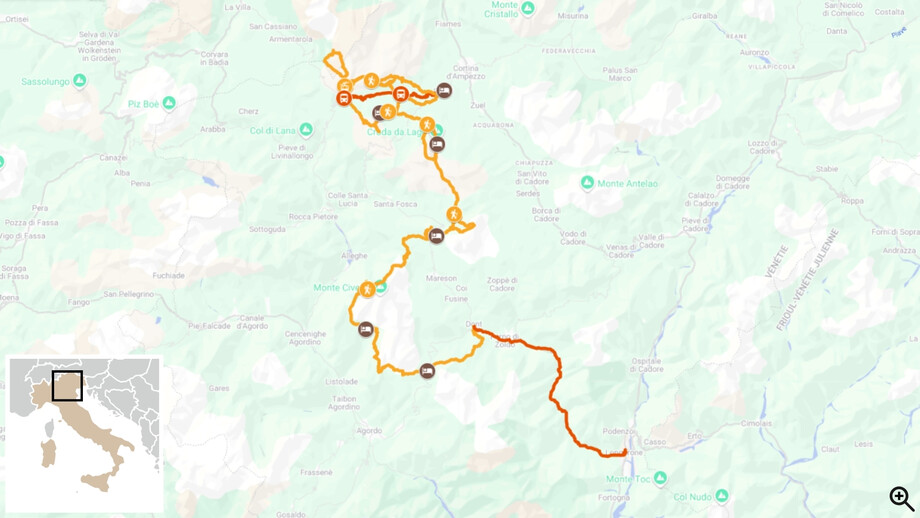
Meeting at Venice airport – Transfer to Pocol
Meet your guide and the rest of the group at Venice airport at 2pm. Private transfer (Included, 2.5 hours) to Pocol (6km/3.7mi from Cortina d’Ampezzo). Accommodation for the night, group dinner and an orientation meeting by your guide are all included this day.
Overnight in a 3* hotel in Pocol; Half-board.
- Accommodation
-
Hotel Argentina Pocol
D2
Pocol – Tofane Traverse – Cinque Torri
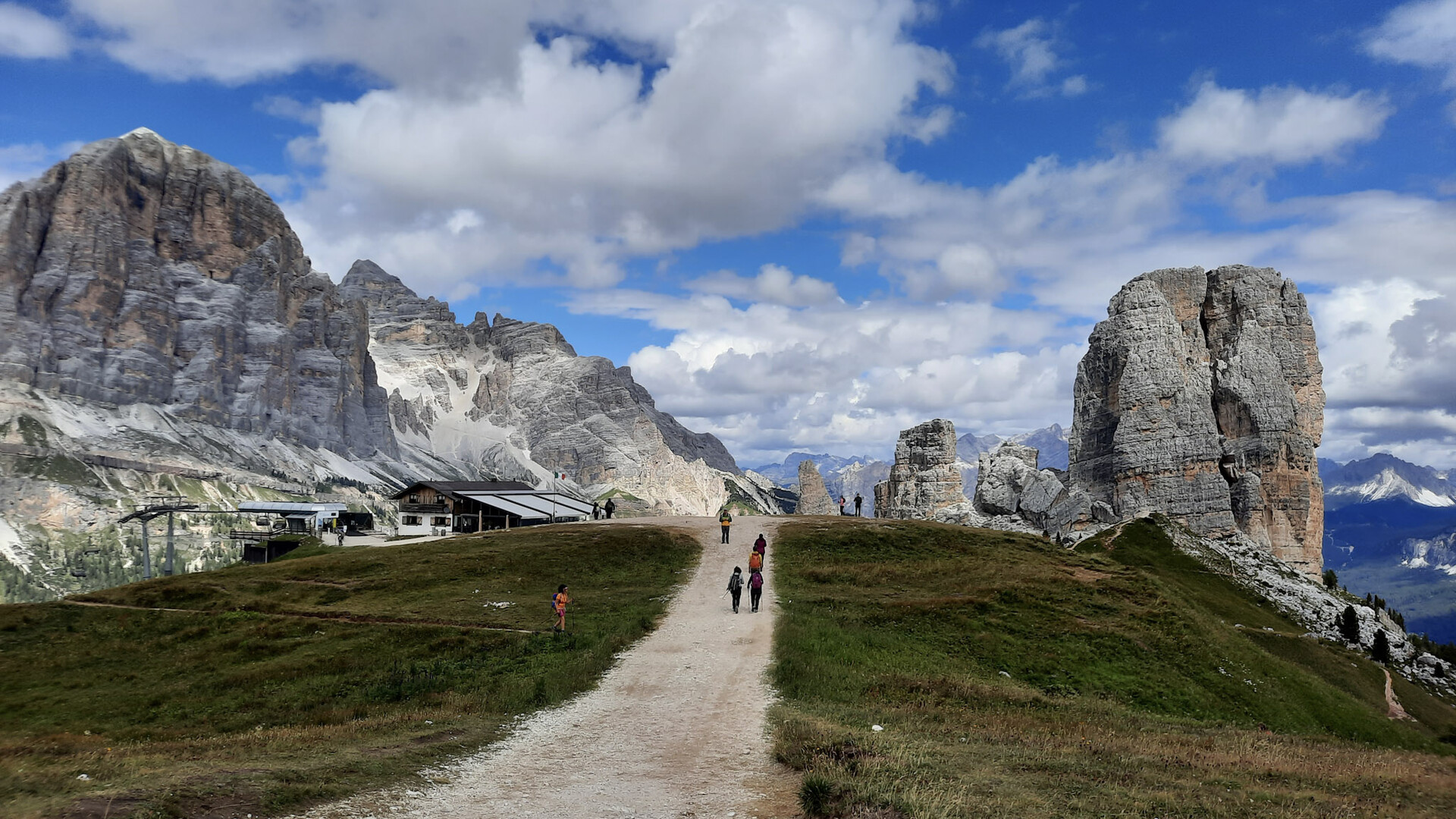
A private group transfer (included, 20 min) brings us close to Passo Falzarego and our first ascent to the Col dei Bos, 2332m/7650ft, to enjoy the panorama of the Travenanzes canyon. Descent to the Passo Falzarego, 2105m/6905ft, through the Falzarego mountain pastures, to the Averau pass, 2435m/7990ft. An easy descent to the Scoiattoli refuge and the Cinque Torri, 5 amazing stone towers hosting a playground for climbers.
About 5 hours of hiking, 10km/6.2mi, +850m/2790ft, -580m/1905ft. Daypack to carry.
Overnight at the Cinque Torri refuge; Half-board.
- Accommodation
-
Cinque Torri Refuge
- Length
-
10km/6.2mi
- Walking time
-
About 5 hours
- Elevation +
-
+850m/2790ft
- Elevation -
-
-580m/1905ft
D3
Cinque Torri – Croda da Lago
We turn our backs on the diamond points of the Tofanes and the spectacular Cinque Torri balanced above the larches, for a wild crossing under the Nuvolau. Further on, the Forcella Ambrizola, at 2277m/7470ft, offers almost infinite views of the forests and peaks surrounding Cortina d'Ampezzo. You have two options: crossing the wild massif of the Croda da Lago, via the Formin pass, 2461m/8074ft, or descending directly to the Federa lake, 2046m/6713ft, and its refuge via the Ambrizola pass, 2277m/7470ft.
About 4.5 to 5.5 hours of walking, from 11.8km/7.3mi to 16.1km/10mi, from +460m/1509ft to +800m/2625ft, from -670m/2198ft to -1010m/3314ft. Overnight pack to carry.
Overnight at Croda da Lago or Malga Federa refuge; Half-board.
- Accommodation
-
Refuge
- Length
-
11.8km/7.3mi to 16.1km/10mi
- Walking time
-
About 4.5 to 5.5 hours
- Elevation +
-
+460m/1509ft to +800m/2625ft
- Elevation -
-
-670m/2198ft to -1010m/3314ft
D4
Croda da Lago – Mont Pelmo – Col de Staulanza – Coldai
From the Ambizola pass, we follow a succession of balcony paths in the mountain pastures, punctuated by hills (Forcella di col Roan, 2075m/6808ft and Forcella Roan, 1999m/6558ft). The panorama is vast with only the Pelmo and Civetta massifs on the horizon. After the pastures, the larch forest that surrounds the Citta di Fiume refuge emerges at the foot of the immense scree field of Mt Pelmo to the Staulanza pass, 1766m/5794ft. Climb to the Coldai gap, 2191m/7188ft, to finish the stage at the Coldai refuge.
About 6 hours of hiking, 16.7km/10.4mi, +860m/2820ft, -770m/2525ft. Overnight pack to carry and you will find your belongings in the evening at the refuge*.
Overnight at Coldai* or Staulanza refuge; Half-board.
*Departure dates staying at Coldai will not have luggage transportation on this stage.
- Accommodation
-
Coldai Refuge
- Length
-
16.7km/10.4mi
- Walking time
-
About 6 hours
- Elevation +
-
+860m/2820ft
- Elevation -
-
-770m/2525ft
D5
Coldai – Civetta – Refuge Vazzoler
Very spectacular crossing of the Civetta: the hanging refuge, the lake and an unforgettable crossing under the Civetta wall, 3220m/10564ft. A balcony of almost 3km/1.9mi to the pleasant Vazzoler hut, 1714m/5623ft, one of our favorites of this crossing. Above your head are 1200m/3937ft of steep vertical terrain without any breach. 1000m/3280ft below, the white and red cubes of the houses and the blue of Lake Alleghe, 966m/3169ft.
About 5 to 5.5 hours of walking, 15.2km/9.4mi, +720m/2362ft, -770m/2526ft. Overnight pack to carry.
Overnight at Vazzoler refuge; Half-board.
- Accommodation
-
Vazzoler Refuge
- Length
-
15.2km/9.4mi
- Walking time
-
About 5 to 5.5 hours
- Elevation +
-
+720m/2362ft
- Elevation -
-
-770m/2526ft
D6
Refuge Vazzoler – Civetta – Passo Duran
Climb to the Col Palanzin, then to the Forcella dell'Orso, in a very wild setting. Towers, peaks, needles, castels, boulders are entangled in the "walls" of the Moiazza (2878m/9442ft). A little respite at the Forcella del Camp (1932m/6339ft) where our direction changes completely. A beautiful crossing before a final climb. A track under the Cima Duran, a shortcut and here are the roofs of the Passo Duran refuge (1601m/5253ft).
About 5 hours of walking, 11.6km/7.2mi, +630m/2067ft, -750m/2461ft. Daypack to carry and you will find your belongings in the evening at Passo Duran.
Overnight at Passo Duran refuge; Half-board.
- Accommodation
-
Passo Duran Refuge
- Length
-
11.6km/7.2mi
- Walking time
-
About 5 hours
- Elevation +
-
+630m/2067ft
- Elevation -
-
-750m/2461ft
D7
Passo Duran – Venice – End of Tour
A group private transfer (included, 2h30 min) in the morning takes us to Venice airport.
End of the tour and a last goodbye in Venice.
Technical description
Level
Intermediary. From 4 to 6 hours of walking and/or 400 to 850m/1315 to2790ft of elevation gain and 500 to 1100m/1640 to 3610ft of elevation loss during hikes; no technical difficulties, mix of paths and trails.
Luggage transportation
D2: You will find your luggage at accommodations
D3: You carry your needed belongings for the night (for the first choice refuge: Croda da lago; possible with the alternative hut)
D4*: You carry your needed belongings for the night (for the first choice refuge: Coldai; possible with the alternative hut)
D5: You carry your needed belongings for the night
D6: You will find your luggage at the refuge
Please note: on the days when you carry your necessary belongings, the extra weight in your bag remains limited (the refuges are comfortable, and you do not need to pack too much).
*On the August 2 departure date luggage transportation is not available on this day.
Duration
7 days / 6 nights / 5 days of hiking
► Start
Day 1 at 2pm at Venice airport.
For those arriving directly by car, meet at 5 pm at the hotel reception. You can arrive from 2pm and settle in. It is possible to park your car for the week in front of the hotel in Pocol.
At the end of the stay, to retrieve your vehicle, you can easily take a bus from Longarone to Cortina (then Pocol).
► End
Day 7, in the morning, at Longarone station (you can then easily get to Cortina or Venice from this station).
Management
An EU Certified Grand Angle mountain hiking guide included.
Accommodation / Catering
► Accommodation
1 night in a 3* hotel in Pocol.
5 nights in comfortable mountain refuges, in a dormitory or shared room. Shared bathrooms in the huts.
► Meals
The food is very good in the Dolomites. Some of the dining rooms offer panoramic views of the surrounding mountains. Dinners and breakfasts are served hot by our hosts and always very plentiful. On this trip there are set menus nightly, usually with a few choices. Picnics are prepared by your guide and served on the trail, balanced and adapted for mountain walking.
*Please specify any food allergy or special diet at the time of registration; We will do our best to adapt your meals.
Orientation Meeting
You will receive an email about two weeks before your departure specifying the time and place of the meeting, the name and contact details of your guide as well as the address of the first accommodation.
Access
► By Plane
We recommend flying out of Venice, Italy at the end of this trip.
Marco Polo Airport - VCE: Venezia Airport – Airport in Venice Marco Polo (VCE)
► By Bus: Venice / Cortina – Longarone / Venice
Cortina d’Ampezzo to Venice > Bus Cortina Express (about 2.5 hours)
Longarone to Venice > Bus Cortina Express (about 1.5 hours)
Bus Schedule Information: Cortina Express | Emotions in motion or ATVO-Azienda Trasporti Veneto Orientale.
Round trip between Cortina d’Ampezzo and Pocol
> Bus DolomitiBus number 31/33
To know the bus schedules, see the site: http://dolomitibus.it (Italian site only available, use translator)
Schedule and tickets:
- Flix Bus: https://www.flixbus.com/
- Bla Bla Car (bus and carpool options): https://www.blablacar.co.uk/bus
► By Train
Venice has 2 different main departure train stations. The Venezia Santa Lucia train station is the closest to the city center and historic area most frequented by tourists. The Venezia Mestre train station serves the Venetian mainland and is in the Mestre area.
Find out about schedules and tickets:
- Italian Railway: Trenitalia
► By Car
- Coming from Paris, pass through Innsbruck, the Brenner Pass, Fortezza, and then head for Dobbiaco (Toblach). Follow the road to Cortina (32 km), then to Pocol, 6 km along the road leading to Passo Falzarego
- From the Alps, go through Milan, and head for Verona, then on to Bolzano and Fortezza. From there, head for Dobbiaco (Toblach). Follow the road to Cortina (32 km), then to Pocol, 6 km along the road to Passo Falzarego.
-Possibility to park your car for the week in front of the hotel in Pocol.
Clothing
It is the client’s responsibility to arrive prepared with the items listed below to help insure a safe and enjoyable trip.
CLOTHING CHECKLIST:
The following items are required for this trip unless otherwise noted. When packing, think layered clothing systems that work together and can be easily added or removed.
- Hiking Boots/Shoes – waterproof, sturdy molded sole, deep tread and ideally well broken in (Note: buy boots/shoes 1/2 size to 1 size larger than street shoes to allow for feet swelling and thicker socks)
- Hiking Socks – one pair for every day or two days of the trip. Hiking/Sport specific padded socks, no cotton please!
- Sun Hat – wide brimmed hat or baseball cap/bandana combo
- Warm Hat & Gloves – lightweight beanie and light-to-mid weight fleece or wool gloves
- Hiking Shirts – non-cotton, breathable short sleeve and/or long sleeve shirts (Note: long sleeve shirts provide better sun protection)
- Warm Top – mid-weight sweater or pullover of wicking material such as merino wool, fleece or polypropylene
- Insulating Jacket – down-fill or synthetic-fill insulated “puffy” jacket or warm, heavy weight fleece jacket
- Hiking Pants & Shorts – nylon pants AND shorts, zip-offs or leggings
- Base Layer/Long Underwear – 1 pair of wicking tops and bottoms that are lightweight to midweight, synthetic wicking materials such as polyester, polypropylene, merino wool, etc.
- Rain Gear – waterproof jacket and pants or high-quality poncho, breathable fabric such as Gore-Tex® or coated nylon. For the pants look for side zippers that will easily allow pulling them over footwear.
- Casual Clothing & Footwear – comfortable clothes and shoes to wear in the evening after activities.
Important Note: Please, no cotton hiking/cycling clothes. Synthetic clothing is very efficient in drying quickly. Merino wool material clothing is also efficient in drying quickly, is comfortable to wear and has the advantage of not developing a bad odor after use.
Gear
GEAR CHECKLIST:
- Backpack – a 45+ Liter sized sized comfortable pack with a hip belt and waterproof cover for use day-to-day while hiking and carrying overnight items (2 nights).
- Personal Luggage – small duffel bag, suitcase or backpack – for extra clothes and casual clothes. Only one piece of luggage per person; Limited to 15kg/33lbs. This bag is transported to the next accommodation on stages with luggage transportation.
- Hydration System – 2+ liters capacity, either water bottles or bladder/hose system and an additional water bottle
- Trekking Poles – telescopic/adjustable poles to help reduce the impact on joints and support hikers in steep and/or rocky terrain. (Note: strongly recommended)
- Headlamp – preferably with an L.E.D. bulb that works with AA or AAA batteries (Note: always test headlamp before trips and travel/pack without batteries in device)
- Picnic/Lunch Kit – knife, plate or bowl, box with closeable lid, utensils, etc.
- Sleep Sack, Sheet & Personal Linens – for use in Refuges.
- Pack Towel – small towel for shower use
- Phone & Charger – local sim card or international plan may be needed. Consider bringing a small power bank to use to recharge devices during trip activities.
- Waterproof Travel Case or Pouch – used to keep important documents (i.e. passport, health/travel insurance, etc.) & phone safe from weather/water
- Sunglasses, Sunscreen, & Lip Balm
- First Aid Kit – see first aid kit suggestions below*
- Personal Toilet Paper Kit – most public restrooms outside of lodging will have toilet paper available, but it is good to be prepared with a personal toilet paper kit to potentially use during portions of this tour. Along the trail, there may be the need to use natural settings for toilets (i.e. digging catholes, etc.) when there are no public toilets available. Kits should include toilet paper, wet wipes, sanitizer & sealable plastic bag(s) for carrying out used paper/wipes.
- Toiletries
- Contact Lenses & Glasses – if wearing contact lenses, please also bring back-up pair of glasses and contacts.
- Prescription Medication – with emergency back-up supply. Please inform trip leader of any medications used.
- Money – It is good to have some local currency, often smaller local businesses do not accept credit cards and/or prefer cash. Some public restrooms require small amounts of cash to use. Gratuity for guide(s) is optional but always appreciated; (The industry average for this trip type is 5-15% of total trip cost. Local currency is preferred. If desired, tipping private drivers is acceptable and the average amount is just a few Euros per ride, but it is not expected and fully optional.
OPTIONAL ITEMS:
- Face Masks; Over-the-counter Rapid Antigen COVID-19 Tests (Note: recommended but optional)
- Travel Power Adapter – Electric power voltage in Italy is 230 V / 50 Hz and the plugs are F & L type
- Support Braces – consider bringing any joint braces that may be currently needed or from past injuries (i.e. knee, ankle, elbow, etc.)
- Sleep Mask & Ear Plugs
- Bug Repellent
- Bandana(s)
- Swimsuit
*FIRST AID KIT SUGGESTIONS:
After years of experience planning adventure travel around the world, we've learned that anything can happen, and every traveler should carry a basic personal first aid kit. We want to ensure our guests are well-prepared and make smart informed travel decisions. In many of the places we operate trips, it may be challenging to find certain medications and/or first aid supplies, and sometimes common items you desire may not be available in the destination you are travelling. That's why it's good to be prepared and carry a small supply of first aid supplies, any prescription medication, and/or over-the-counter medications you may require during your travels.
We recommend discussing your travel plans, vaccination requirements, and any medication usage with your primary healthcare provider before embarking on our trips. This helps ensure you have a safe and enjoyable travel experience.
During our “Guided” trips, our staff always have emergency equipment on hand to assist anyone in need, including our guests. This equipment includes communication devices and a comprehensive first aid kit with items we've found to be effective for the most common health issues we encounter.
Here is a basic list of what we think makes a good personal travel first aid kit:
- Medications – Brands of your choice, all medications should be either prescribed directly by your doctor or discussed with a doctor prior to use.
- Electrolyte Replacement/Drink Mix – brand of choice
- Creams – Antibiotic ointment, Anti-Itch: Hydrocortisone, Arnica
- Eye Problems: Dry/Itchy – Eye drops
- Feminine Hygiene – Tampons
- Wound Care – a various pack of bandages, antiseptic swabs
- Blister Care – blister kit made up of items of your choice
- Sun Protection – sunscreen, SPF lip balm
- Various Items – Athletic tape/”KT Tape”, Nail clippers, Tweezers, Small bottle of hand sanitizer, Sewing kit (clothing/button repairs), Disposable surgical gloves (1-2 pairs)
Other
PACKING FOR TRAVEL:
It is recommended that you prepare your items in the following manner for your travels to this trip.
“Carry-on Bag(s)” - This is the bag you will bring with you on the plane. We recommend all your pertinent information be in this bag (passport, travel documents, etc.) as well as your most important gear items (hiking footwear, jacket, prescription medication, etc.) in case any checked luggage items become lost or delayed.
“Checked Bag(s)” - This bag will be checked and contain the rest of your personal items (clothing and gear, etc.).
Please Note: Again, it is recommended to either wear or pack in your “Carry-on Bag” the main gear items you need for this trip vs. putting them in your checked “Travel Bag” (in case luggage is delayed). Hiking footwear is probably the hardest item to replace last minute if items become lost or delayed past the intended start date of the trip. Lost or delayed luggage has become more common in major airports for international travel since the global pandemic.
LUGGAGE MANAGEMENT DURING TRIP:
During this trip, the packing system needs to be in 2 bags.
Extra Luggage - “Checked Bag(s)” & ”Carry-on Bag(s)”: This bag will contain all the items you want to bring along on the trip. Only one piece of luggage transported (except D3 & D5) per person (if choosing the luggage transportation option); Limited to 15kg/33lbs.
Day Backpack (not provided): All guests need a backpack, which they will be responsible for carrying during trip activities. Items in this bag should include anything you may need throughout the day during the trip. (i.e. rain gear, warm layers, water, sunscreen/lip balm, snacks/food, camera/phone, etc.). On Day 3 and Day 5 you will carry the items you need overnight, and your backpack should be comfortable and large enough to manage this.
Country
Country: Italy
Capital: Rome
Formalities
► Documents
Travellers from the European Union, including children, need a valid identity card or passport. Check with the authorities in your home country for the conditions of entering this destination.
► Health/Insurance
Do not forget your card and/or policy details for your health insurance and/or travel insurance.
Language
In the Dolomites, the region is often bilingual: people speak either German or Italian or both. Tourist area employees almost always speak some English.
Useful addresses
European Emergency Number: 112
Tourism Office in Italy
Visit: Discover Italy: Official Tourism Website - Italia.it
Altapusteria online | |
South Tyrol online | |
Bus service | |
Weather forecast | |
Italian Railways | |
Italian motorways |
Phone
Phone Country Code
Calling Italy: + 39
Currencies
Italy is a Member-State of the European Union and uses its uniform currency – the Euro €. Italy, as is the case with the other Member-States of the E.U. uses eight coins as follows: 1, 2, 5, 10, 20 and 50 cents and 1 and 2 Euros. The banknotes are issued in the following denominations: 5, 10, 20, 50, 100, 200 and 500 Euros. Currency exchange rates are clearly displayed in every bank that accepts currency exchange, while credit card holders may acquire money from the ATMs of the collaborating banks. Italian banks are open for the public from 8:00 to 13:00 and from 14:30 to 16:30 Monday to Friday. They are closed on Public Holidays. Euros can also be exchanged for notes of other foreign currencies at exchange offices that are situated at the airport and certain main ports, in the larger cities, as well as at many tourist destinations. A passport is required when exchanging currencies. Italy more than other EU destinations, still prefer cash in most settings, but credit card use is becoming more and more available.
Other
Local Information
The Dolomites
Déodat Tancrède Gratet de Dolomieu (1750 – 1801) was a French man of aristocratic origin. He was the man who discovered the chemical composition of dolomitic rocks in which calcium and magnesium carbonates become crimson at dawn and at sunset. It arouses a deep emotion that warms your heart!
This new mineral was discovered in 1789 and it received the name of “Dolomite” in honor of Dolomieu. The rock itself was called “Dolomitic rock”. Later, in 1864, the whole mountainous region where this rock prevails took on the name we know today, the DOLOMITES.
In the Dolomites, which are a genuine stone garden, we find more than 1,500 different species of plants, but also wood and forests among the largest and the most varied ones in Europe. At the season of blooming flowers, it is an explosion of colors. More than 50 varieties of orchids and countless meadow flowers are mixed with red fruits, edelweiss, and other solitary mountain flowers. We can also find a great number of herbs and medicinal plants and mushrooms of all sorts. The diversity and the variety of the ground enable the blooming of this huge multicolored garden that contributes to the peculiarity of the Dolomites.
Painters, writers, and poets, have all praised the mountains of the Veneto region. For centuries, explorers, fearless climbers, tireless hunters, mushroom lovers, and hikers searched for unspoiled, hidden nature and pure air to breath within these mountains. The distinct and memorable contours etched against the boundless expanse of the celestial heights in the upper atmosphere offers an emotion you must experience firsthand to perfectly understand it. The Dolomites, mountains of legend and of extreme rock climbing, with their spiked summits and their bright pastel tints, exert a magical and strong attraction on all human beings.
They offer the possibility to live an unforgettable experience, an opportunity for all, of any age and physical condition; indeed, to appreciate them and be definitively conquered by their beauty, it is not necessary to climb them; you only must get close and look at them. This is the aim of this trip.
My trip's carbon footprint
Your carbon footprint: 0Kg of CO2e per passenger
 0Kg of CO2e related to luggage transport
 0Kg of CO2e for your accommodation
This circuit does not exactly match your expectations?
Create a customized tripWe also advise you

Guided hike
Dolomites of Cortina Guided
Europe -
Italy -
Alps -
Italian Alps -
Dolomites
- ITAGP1014
- Departure date
- Next departure on 13/06/2027
- Level
-
- Comfort
-
- Travel from
- 7 days
From 3 300,00 €
-
(33 reviews)

Guided hike
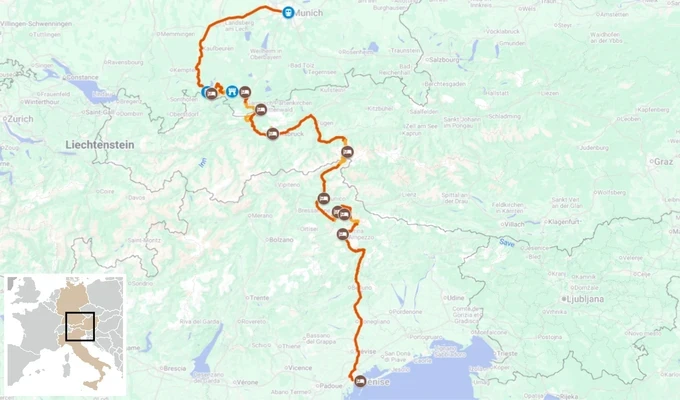
Munich to Venice: Guided Journey Across the Alps
Europe -
Germany -
Austria -
Italy -
Long-distance Hikes -
Alps -
Bavaria -
South Tyrol -
Dolomites
- DEUGP1001
- Departure date
- Next departure on 12/07/2027
- Level
-
- Comfort
-
- Travel from
- 14 days
From 5 835,00 €
-
(5 reviews)

Guided hike
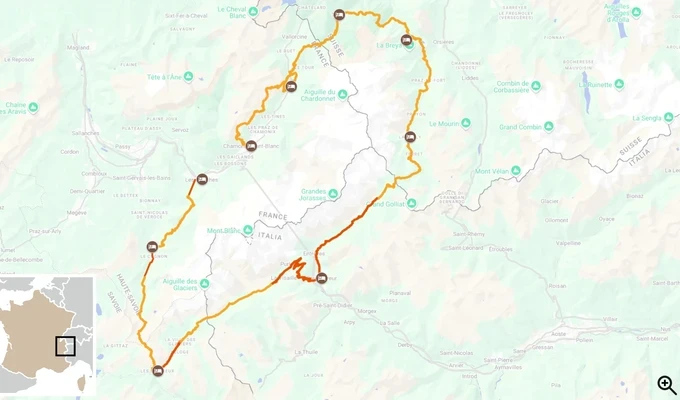
Tour du Mont Blanc - Guided 10-Day
Europe -
France -
Italy -
Switzerland -
Alps -
Northern French Alps -
Mont-Blanc
- FRAGP1017
- Departure date
- Next guaranteed departure on 13/06/2027
- Level
-
- Comfort
-
- Travel from
- 10 days
From 3 795,00 €
-
(31 reviews)

Self-guided hike
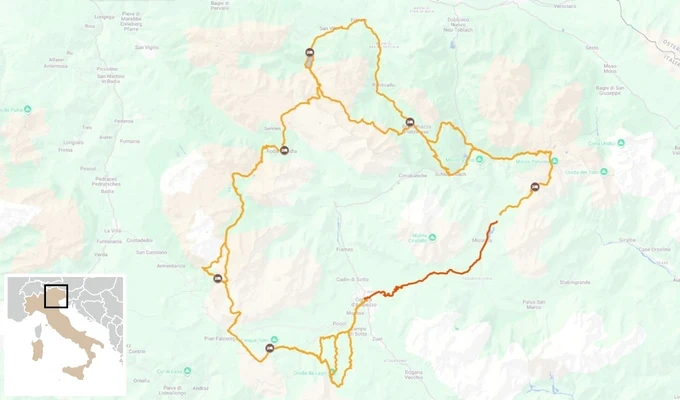
Dolomites Hut to Hut, from Lago di Braies to Tre Cime di Lavaredo
Europe -
Italy -
Dolomites -
Alps -
Italian Alps -
South Tyrol
- ITALP0004
- Level
-
- Comfort
-
- Travel from
- 7 days
From 830,00 €

Traveller’s reviews
Overall all this was a great experience. The mountain scenery is fantastic.
This was a great trip on a great Dolomites route. The guide was amazing & his experience in the mountains made the trip enjoyable.