


How to travel more responsibly?
At Grand Angle, we are convinced that it is possible to travel differently, by minimizing our impact on the planet and by promoting respectful practices towards local populations. Sustainable tourism is not just a trend — it is a necessity.
Summary
1. Measuring our impact: towards carbon transparency for your trips

At Grand Angle, we have chosen transparency and are committed to measuring the carbon impact of our trips. Understanding and assessing the greenhouse gas emissions generated by a trip is the essential first step to taking action and offering more sustainable alternatives. This approach not only allows us to inform our travellers but also to identify the levers for collectively reducing our environmental footprint.
Our calculation method is based on a detailed analysis of the different sources of emissions related to a trip:
- Transport: This is often the largest contributor. We consider the type of transport (plane, train, car, bike), the distance travelled, and the number of passengers.
- Accommodation: The impact varies considerably depending on the type of accommodation (hotel, guesthouse, bivouac) and how it operates (energy consumption, waste management).
- Food: We assess the emissions related to the production and transport of food consumed during the trip.
- Activities: Some activities may have a more or less significant impact (e.g. motorized activities versus walking hikes).
For a deeper understanding of our approach, the calculation methods used and the factors taken into account, we invite you to consult our dedicated page: understanding the carbon footprint calculation of your trip.
Measuring the carbon footprint helps identify ways to reduce CO2 emissions from our trips and to inform travellers when choosing their holiday.
Getting to the destination is often the largest part of the carbon footprint of your trip. It can represent up to 80% of emissions when travelling by plane, but less than 5% when choosing the train! It is therefore the first lever of action for travellers.
The longer you stay at your destination, the lower the daily carbon impact becomes, particularly for trips where transport is CO2-intensive.
By nature, travel emits greenhouse gases. However, it also offers many economic and social benefits. Grand Angle aims to encourage a transition from high-carbon to low-carbon travel with a better carbon balance.
2. Reducing the impact of our trips
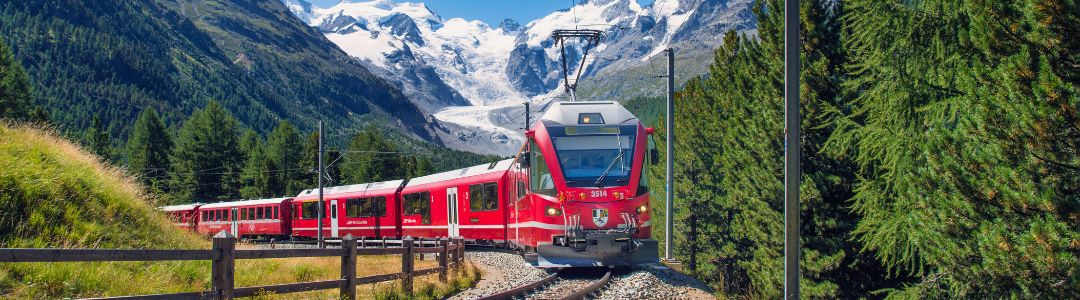
In recent years, Grand Angle has made several strategic choices and implemented various actions to reduce its carbon footprint, its environmental impact, and that of its travellers — both in destination choices (impact related to travel to the destination) and during the trip itself.
Choosing destinations
Grand Angle has chosen Europe, which now represents 95% of our travel catalogue. Nearly 400 trips (two-thirds of our tours) are located less than 1,000 km from Paris or Lyon (the main geographical area of our clientele): in France, Germany, Italy, Austria, and other neighbouring countries. France holds a special place with more than 200 trips available.
We have gradually reduced our long-haul trips to offer holidays that are mostly accessible by car or train. Concretely, this means we no longer offer Québec, New Zealand or the American West. We have also significantly reduced our trips to Africa and Asia. In line with this approach, among the 60 new trips launched by Grand Angle in recent years, 45 of them are in France or in neighbouring countries. This specialization in Europe mechanically reduces the carbon footprint of our travellers. This reduction must nonetheless be nuanced by the overall increase in traveller numbers in recent years.
Transport
“It’s (also) up to us to make you prefer the train!” — not just SNCF. Better-informed travellers make wiser choices regarding their mode of transport. When possible, let’s prefer the train! With more than 400 trips within 1,000 km of Paris or Lyon, you have plenty of options! Despite this proximity, many of our hike starting points can be difficult to access due to their remote locations, which can be a barrier.
Carpooling is also an easy way to reduce your CO2 impact. We are also considering implementing a free carpooling service. The goal? Making it easier for our travellers to connect when they want to share a ride to the start of their trip.
Finally, you’ll find all the information on how to reach the starting point — by train, car, or other — on every trip page!
Gentle activities for the body, mind and planet
What better than walking or cycling to access breathtaking landscapes or discover a region, all while minimizing your carbon footprint? Grand Angle has always based its trips on these gentle activities—they are at the heart of our identity!
“Adventure is worthwhile” (Aristotle), but one must still be able to enjoy it! Travel has many benefits for local populations and allows us to open up to others. To fully enjoy it, take your time and opt for trips of at least one week! You will also reduce your daily carbon impact. At Grand Angle, we do not offer very short trips such as weekend breaks, and have developed many 15-day tours, such as our major traverses or long itineraries that can be combined over several weeks: the Vélodyssée, the Loire, the Danube, the Stevenson Trail, the Camino de Santiago, and many more.
During the trip
Looking for a cycling trip but don’t have a suitable bike? Don’t worry — Grand Angle always offers bike rental. More than 8 out of 10 travellers choose this option, which helps avoid purchasing new equipment. However, bike rental may also have a rebound effect, as rental fleets may increase in addition to private bike ownership. Many of you already have your own bikes but choose rental for logistical reasons.
To limit waste, Grand Angle has opted for fabric travel pouches, reusable on other occasions. The travel folder is separated to avoid duplicates with the digital folder (the digital version always exists — the paper version is additional). On our guided trips, guides are encouraged to use organic, bulk and local products for picnics. Reusable fabric bags are used to transport food.
3. Contributing to environmental projects
We first act to reduce the carbon footprint of our trips, and then support certified emission reduction projects. In this context, we participate in the SETOSPHERE Endowment Fund, initiated by SETO, which finances initiatives contributing to carbon neutrality.
In particular, we support the Jiko Sawa project in Kenya, certified Gold Standard and developed by EcoAct. It distributes 25,000 improved cooking stoves to rural communities that rely on traditional stoves, which consume large amounts of wood and are harmful to health. These stoves reduce wood consumption by 60%, limiting deforestation and indoor air pollution, while creating local jobs and freeing up time for women for education or economic activities.
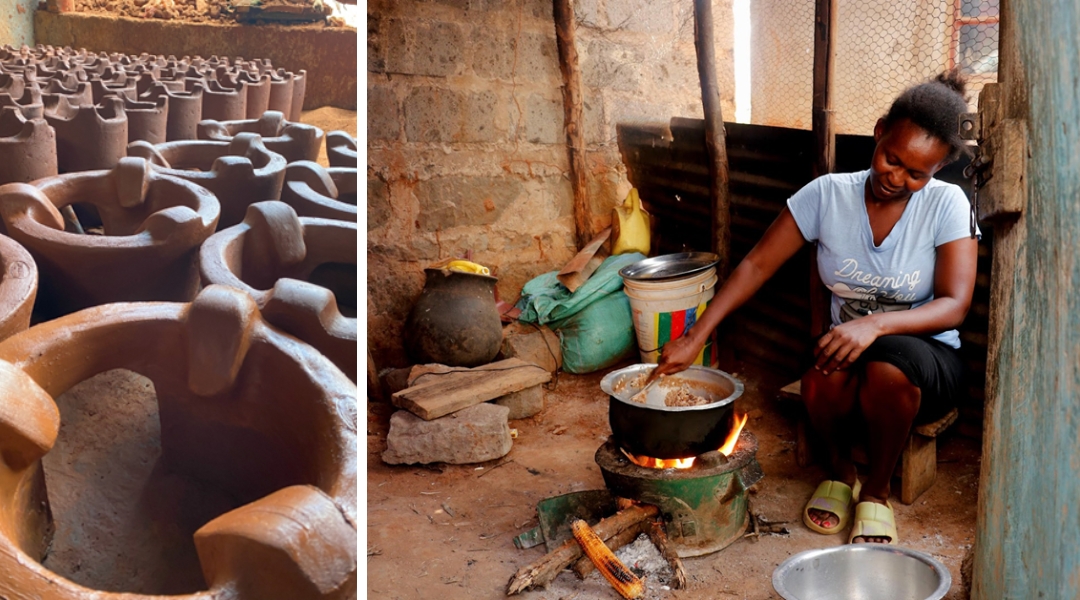
Thanks to this project, SETOSPHERE and its members take concrete action for sustainable tourism and the fight against climate change, in line with the Paris Agreement.
Travelife certification: international recognition of our commitment

Grand Angle is now a Travelife Partner, the first level of the Travelife certification. This distinction recognizes our agency’s concrete and structured commitment to implementing responsible practices at every level: internal management, choice of partners, organization of trips and traveller information.
The Travelife programme is an international benchmark in the tourism industry. It is based on more than 200 criteria covering all activities of a tour operator: social responsibility, environmental protection, respect for local communities, sustainable resource management and continuous improvement. Obtaining the Travelife Partner status confirms that we have reached an important milestone in this demanding process.
But our approach does not stop there. We are already on our way to achieving the second and final level of certification: Travelife Certified. This higher level is based on strengthened requirements, in-depth external audits and the demonstration of long-term concrete actions in favour of sustainable tourism.
In practical terms, being Travelife-certified commits us to:
- Strengthening our environmental practices: responsible resource management, emissions reduction and waste limitation.
- Collaborating with local partners committed to ethical and sustainable practices.
- Promoting tourism that benefits local communities: respect for cultures, support for local initiatives, promotion of low-impact activities.
- Informing and raising awareness among our travellers transparently about our actions and the best practices to adopt.
The Travelife Partner status is only a step: the Travelife certification process involves continuous improvement, with precise objectives to reach in order to progress towards the Travelife Certified level, which we are actively aiming for. This ongoing dynamic reflects our determination to go further in our commitment to sustainable, coherent and responsible tourism.
Commitment to Agir pour un Tourisme Responsable (ATR)
Grand Angle is a member of ATR (Agir pour un Tourisme Responsable - "Acting for Responsible Tourism"), an association that brings together tourism stakeholders committed to more sustainable and responsible practices. The values shared by ATR, transparency between the agency and travellers, partnership with local service providers, and coherence in the organization of trips, are principles with which we fully align.
Being a member of ATR commits us to:
- Promoting quality tourism
- Respecting the environment, heritage and local populations
- Raising travellers’ awareness of local customs
- Providing travellers with transparent information about their travel conditions
- To help you prepare for your trip, we invite you to read the traveller’s ethical charter
Our responsible tourism approach is based on concrete actions, such as evaluating and reducing our environmental impacts (carbon emissions, waste management, particularly plastics). These commitments guide the continuous improvements we implement.
Several areas for further progress remain, such as strengthening the information provided to travellers on responsible tourism issues (on our website, in satisfaction surveys, technical sheets, etc.), further developing relationships with our local partners, or encouraging the use of alternative modes of transport.
Our Sustainable Development Policy
At Grand Angle, our commitment to responsible tourism is reflected in concrete actions at every stage of the journey, from design to implementation. We have developed a clear sustainable development policy based on measuring our impact, reducing our emissions, and contributing to environmental projects. To learn more about all our commitments and the details of our initiatives, you can consult our sustainable development policy.